
Master Wang Fengming
A week in New Jersey with my teacher

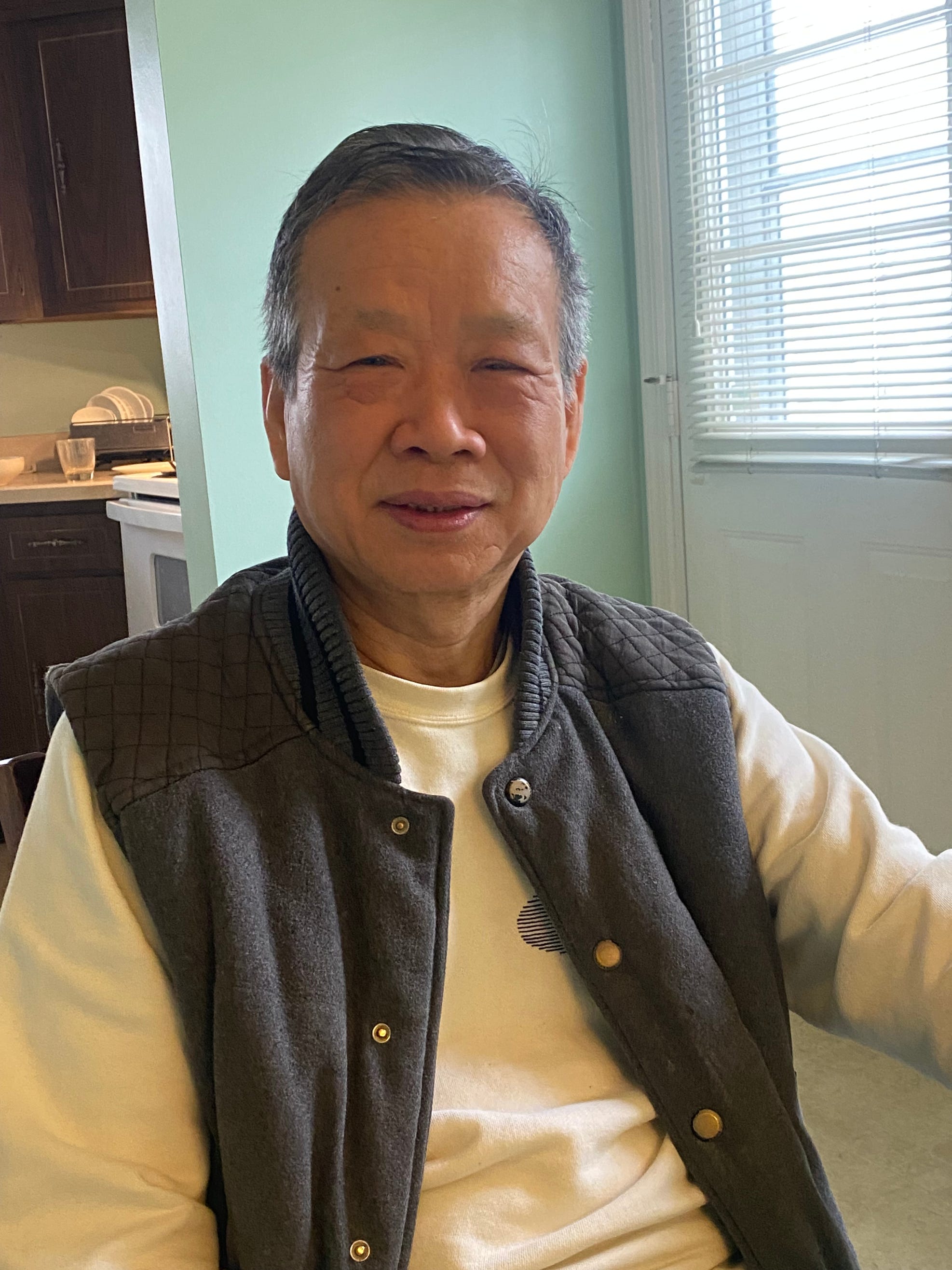
Over the holiday I visited Master Wang Fengming, my martial arts instructor and friend, at his home in New Jersey. I went up on Christmas Day and returned on New Year’s Eve. Master Wang was gracious enough to allow me to stay in his house. Besides all the time spent training, we had a good time cooking and sharing meals. My Taiji/Bagua brother, Dr. Henry McCann, came down and trained with us one day, and I had the opportunity to participate in a class with Master Wang’s other students.
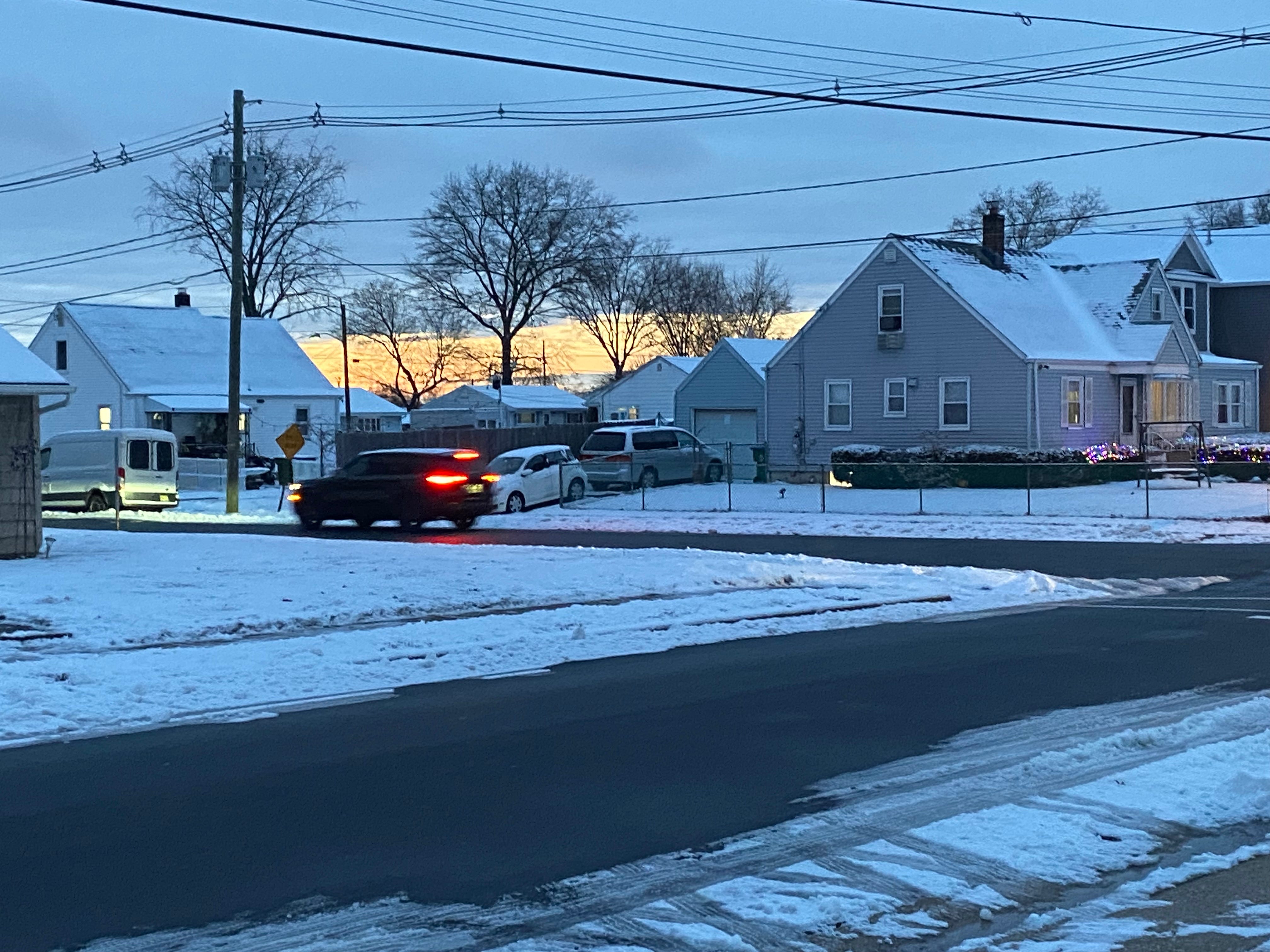
I also had the rare opportunity, for me, of shoveling snow! It has been quite a while since I’ve done that. It was very cold, compared to what I’m used to in South Carolina. I enjoyed going for some walks, visiting H Mart, an amazing Korean market, and the Island Spa. It was a great vacation, as well as an opportunity to work with Wang Laoshi to improve my skills and understanding.
Wang Fengming is an internationally renowned master of Taiji, Qigong, and the Nourishing Life tradition of Chinese Medicine. He is the author of several books (in Chinese and English) and has published more than 100 articles in martial arts magazines around the world. More than 20 martial arts organizations in various parts of the world have appointed Master Wang as honorary institute director, professor, or consultant. In 2013 the government of China designated Master Wang a Successor of National Intangible Cultural Heritage.
Master Wang is a disciple of Grand Master Feng Zhiqiang, a 11th generation successor of Chen Style Taijiquan and a 2nd generation successor of Hunyuan Taijiquan. He is also a disciple of Liu Xinghan, the 4th generation successor to Baquazhang. Master Wang started martial arts training and practice at age eight in China. He has studied and taught martial arts for several decades, and won many awards in China and international martial arts and qigong competition. Currently Master Wang is the director of the World Chen Style Hun Yuan Taiji Association and continues to lecture internationally. (*)
I was fortunate enough to meet Master Wang in 2015. (I was in NYC to study with Frank Kimbrough, the great Jazz Pianist who passed suddenly in 2020.) I took the opportunity to take the train to Edison, NJ, where Laoshi lives. We met outside on the grounds of the local community center, and trained for two hours in a cold, misty rain. I think it’s fair to say that it was life changing for me.
Wang Laoshi is a most generous and humble man and teacher. I had been studying the Hunyuan style for several years up to that point. My teachers were excellent. I had known about Laoshi for a while and hoped for this opportunity. I was more than pleasantly surprised when I found that he also taught Bagua, and was a lineage holder.
Since that time, I’ve been to visit him 5 or 6 times, twice to weekend workshops in Vermont, and now several times in Edison. He has also graciously offered me some instruction by video, which is challenging, but ultimately rewarding. Fortunately, I get to meet with him to try to clear up my mistakes!
Laoshi has twice been a guest intructor for a Taiji course that I teach at Furman University, where I serve as an adjunct instructor.
In preparation for this trip, Laoshi asked me what I wanted to learn. I had a whole list of things, but asked primarily if he could help me improve Neigong. Neigong is Qigong, but more focused on internal power or energy. Laoshi said they are the same thing.
Ultimately, this is what I took away from the training with him. It was applied to the whole range of practices that we covered. I will say that this has always been my weakest point. Now I feel that as a result of our work together recently, my understanding has grown considerably. I hope to cultivate this aspect of practice much more successfully.
As far as specific practices, I’ll just list them for brevity. We reviewed everything that he has taught me up to this point, and he offered corrections, and made observations. He did show me a couple of new Qigong exercises, at my request.
Qigong exercises, Warm up exercises (Silk Reeling Exercise), Eight Taiji Energies, Push Hands, Taiji Stick and Ruler, Taiji 83 form, PaoCui 71 form, Bagua 8 Mother Palms (Circle Walking with fixed postures), 8 Big Palms (Palm Changes), Bagua 8 Fists, 8 Elbows, 8 Palms, 8 Legs.
It was a lot of stuff. Probably three hours a day of training. I also got to participate in a class where we did Warm ups, and Standing meditation (Zhan Zhuang). Laoshi corrected my standing posture, as well. We also worked on 24 form Taiji in class.
When Henry came to visit, he generously worked with me on a lot of the Bagua material. Last year, Henry was introduced to some of the Bagua practitioners that Laoshi is associated with in China. He had some good insights to share. Henry also speaks fluent Chinese, so that is very helpful!
I hope some of you find this interesting. I am available to teach if you are interested. (Keithdavistaiji@pm.me). Soon I hope to offer courses online. For now, I teach privately online and in person.
I feel so fortunate and grateful that I was able to make this trip. Thank you to Master Wang and to Henry for your patience and generosity. I am planning to go to China for the summer workshop that Laoshi teaches. That should be great!
Best wishes to all of you!
(*) Thank you to Dr. Henry McCann for allowing me to quote these two paragraphs from his website. Asianmedicine.org
I also recommend Henry’s other website: ClassicalTaiji.org